A well-built garden fence does more than just mark the edge of your property-it protects your privacy, boosts curb appeal, and can even add value to your home. The key to a fence that stands the test of time lies in choosing the right posts. While timber and metal are common options, concrete fence posts are increasingly popular for their unbeatable durability, strength, and minimal maintenance requirements. If you're looking to create a boundary that will remain sturdy and attractive through years of British weather, this guide will show you exactly how to install concrete fence posts with professional results.
What you’ll need for the job
Before you dig the first hole, make sure you’ve got everything at hand for a smooth installation.
Tools to gather
- Spirit level (for checking vertical alignment)
- Post hole digger or auger
- Shovel
- Tape measure
- String line and stakes
- Wheelbarrow and spade for mixing concrete
Materials checklist
- concrete fence posts
- Gravel (for drainage)
- Ready-mix or bagged concrete
- Fence panels or rails
Safety gear
- Heavy-duty gloves
- Sturdy boots
- Eye protection (especially during mixing)
- Dust mask (for concrete work)
Work is much easier on a dry day, so check the forecast before you start. Clear your work area and make sure you have access to water for mixing concrete.
Mapping out your fence line
Getting the layout right from the start will save headaches later. Take your time to measure and mark precisely.
Marking the boundary
- Set stakes at the ends of your planned fence and run a tight string between them to define the line.
- Measure the width of your fence panels (typically 1.8m or 6ft) and mark where each post will go.
- Double-check all your measurements and ensure each marker is perfectly in line for a tidy result.
Before you dig
- Contact local utility companies to make sure you won’t hit any pipes or cables.
- Confirm property boundaries, and if your fence is shared or unusually high, check with neighbours or local authorities.
Setting your concrete fence posts
With the plan in place, you’re ready to get your hands dirty.
Digging holes for the posts
- Holes should be at least 600mm (2ft) deep, or about one-third the length of the post for taller fences.
- Make each hole 250-300mm (10-12in) wide to allow for a solid concrete surround.
A post hole digger makes this task easier and helps keep holes uniform.
Getting the posts perfectly upright
- Add 50mm (2in) of gravel to the bottom of each hole to help with drainage.
- Stand the concrete fence post upright in the hole.
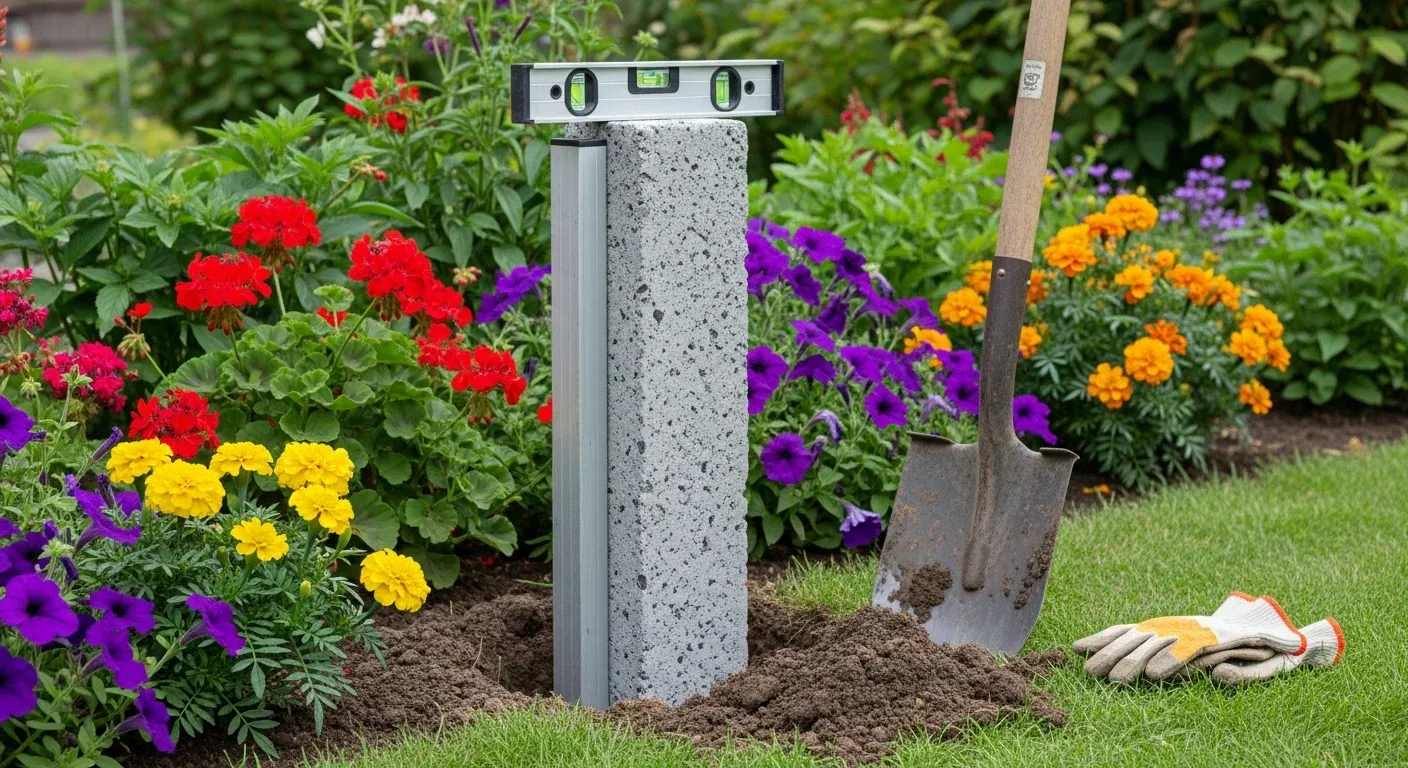
- Use a spirit level on two sides to ensure the post is vertical.
- Support the post with battens or ask a friend to hold it steady.
Mixing and pouring the concrete
- Mix concrete to a thick, workable consistency-neither too wet nor too dry.
- Fill the hole around the post, tamping down as you go to eliminate air pockets.
- Slope the top of the concrete away from the post so rainwater runs off.
- Re-check the alignment with your spirit level and adjust if needed.
- Let the concrete cure for at least 24-48 hours before attaching panels.
Allowing the concrete to set fully is crucial for the strength and stability of your fence.
Adding fence panels and tidying up
Once the posts are solid, you can move on to fitting the panels and finishing touches.
Installing the panels
- Lift each panel into the slots or fix them in place, depending on your post style.
- Use galvanized clips or screws to secure panels for extra strength.
- Check each panel with a spirit level before fixing it completely to keep everything straight.
Finishing touches
- Step back and sight along the fence line to ensure everything is aligned.
- Fill any gaps around the posts with soil and tamp it down for a neat finish.
- Even though concrete fence posts are low maintenance, it’s wise to check each year for any movement or ground heave, and keep the base clear of debris to prevent moisture build-up.
Choosing concrete fence posts is an investment in a boundary that will stay strong and attractive, no matter the weather. By planning carefully and following each step, you’ll end up with a fence that not only protects your garden but also looks great for years to come.
If you’re ready to upgrade your garden boundary, explore the full selection of to find the perfect fit for your project. With the right approach and quality materials, you’ll enjoy a garden fence that stands the test of tim

Daniel Foster
With over a decade of experience scaling online stores, Daniel shares actionable strategies for today's entrepreneurs. His articles cover conversion rate optimization, digital marketing funnels, and the latest ecommerce trends.