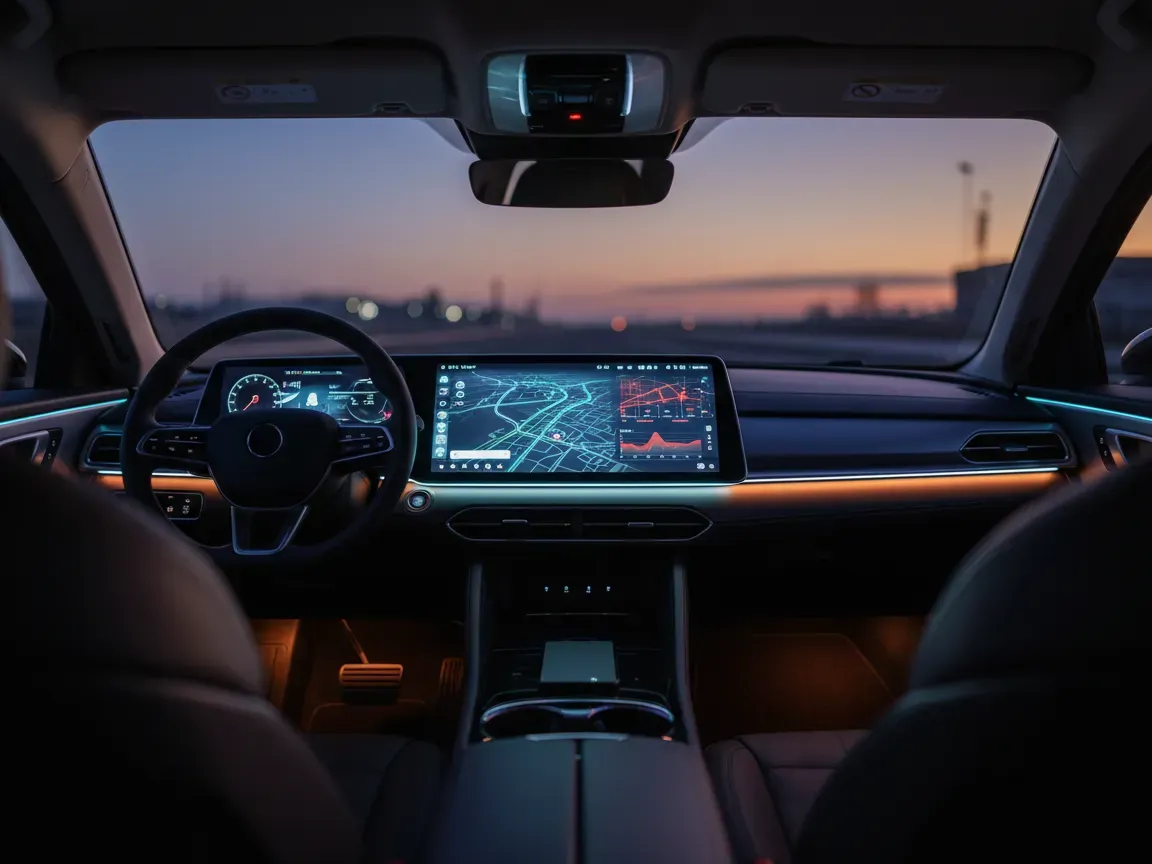
The moment you sync your smartphone to your vehicle or accept the digital terms on your dashboard, your car turns into a sophisticated data collection hub. Modern automobiles monitor far more than mechanical health or fuel efficiency. Every trip generates an intricate record of your personal habits, movements, and preferences.
Most drivers believe this information stays securely locked within their local dashboard computer. In reality, automakers continuously transmit detailed telemetry to remote servers, often without clear consent. Understanding what your vehicle monitors and where that information travels is the first step toward regaining control over your digital footprint behind the wheel.
What Personal Data Does Your Connected Car Actually Track?
Modern vehicles rely on dozens of integrated sensors, cameras, and microphones that capture your daily routine in high resolution.
The range of collected data points often includes:
- Precise geolocation history, including exact routes, frequent stops, and how long you remain parked at specific addresses.
- Smartphone contacts, call logs, text message metadata, and media libraries transferred during routine device pairing.
- Physical metrics from seat sensors, steering wheel touchpoints, and internal cabin cameras monitoring driver alertness.
- Technical driving habits such as acceleration rates, hard braking events, average speeds, and seatbelt usage.
When combined, these separate points build an intimate profile of your life, revealing everything from work schedules and medical visits to personal relationships.
How Automakers Collect Telemetry Through Infotainment and Apps?
Automakers do not rely on a single pipeline to extract driving records. Instead, they utilize a multi-layered ecosystem built around onboard cellular modems, infotainment systems, and mobile companion apps.
Factory infotainment centers act as the primary interface for permission harvesting. Standard setup prompts frequently bundle critical driving functions with sweeping consent agreements for continuous data transmission. Drivers usually agree to these terms simply to enable basic navigation or radio controls.
Companion smartphone apps extend this tracking far beyond the vehicle cabin. These programs often request background access to phone location, Bluetooth connections, and local storage. By monitoring your device even when the engine is off, automakers bridge your driving behaviors with your broader digital footprint.
Who Buys and Uses Your Driving Behavior Records?
Automotive data collection is not just an engineering tool; it is a highly profitable commercial asset. Vehicle manufacturers regularly monetize customer metrics by working with third-party networks.
The primary recipients of this information include:
- Specialized data brokers that aggregate consumer activity to build commercial marketing databases.
- Advertising agencies seeking to deliver hyper-targeted promotions based on where you travel and shop.
- Risk assessment firms and insurance bureaus that evaluate individual driving safety profiles behind closed doors.
Because privacy agreements are intentionally written in complex legal language, drivers rarely realize their routine commutes are packaged and sold across an open data marketplace.
Why Vehicle Data Sharing Directly Impacts Your Insurance Rates?
The financial consequences of unmonitored telematics are already showing up in household budgets. Insurance providers increasingly rely on real-time vehicle metrics to adjust premiums, often penalizing drivers for actions they never knew were recorded.
Automakers frequently partner with risk exchange platforms that score your driving performance. A sudden stop to avoid an animal or regular late-night highway travel can be automatically categorized as high-risk behavior. Even if you maintain an accident-free record, these invisible scores can prevent you from securing standard rates.
Because this reporting happens silently in the background, vehicle owners often face sudden rate increases without receiving an explanation or an easy way to dispute the underlying telemetry.
How to Disable Unnecessary Tracking Features in Your Vehicle Settings?
Reclaiming your privacy starts directly inside the vehicle cabin through the central display console.
Take these steps to restrict onboard data collection:
- Open the main settings menu and locate the privacy, connectivity, or system data tabs.
- Disable optional location-sharing services, remote diagnostics, and usage-based feedback programs.
- Reset the infotainment system to clear stored phone directories, paired device identities, and saved destination history.
- Turn off automatic Wi-Fi connections that upload diagnostic batches whenever you park near familiar networks.
While turning off these features may disable certain connected conveniences, it cuts off the continuous stream of raw metrics sent to corporate servers.
Practical Ways to Protect Your Digital Privacy on the Road
Restricting vehicle settings is only part of the solution. You must also adjust how your personal devices interact with your car on a daily basis.
Begin with your smartphone permissions. Audit the automaker companion app installed on your phone, revoking background location tracking, microphone permissions, and access to your address book. If an app does not strictly require daily access to function as a remote key, consider deleting it entirely.
When renting a car or borrowing an unfamiliar vehicle, avoid plugging your phone into the dashboard via USB. Standard USB ports often initiate automatic data transfers without asking. Use a dedicated 12V adapter for charging instead, and decline contact synchronization if you connect via Bluetooth. Finally, check state privacy portals and automaker opt-out pages to formally request the deletion of your existing telematics history.
The Long-Term Cost of Driving an Always-Connected Vehicle
Modern automotive design has made real-time tracking the default standard for millions of motorists. While remote vehicle starters and built-in navigation offer everyday convenience, they come at the expense of personal autonomy and financial transparency. Driving should not require trading away basic digital privacy.
Taking the time to review software permissions, disconnect unnecessary third-party services, and opt out of commercial data brokerage programs provides meaningful protection. As vehicles become more integrated with corporate data platforms, staying informed about your car digital footprint remains the most effective defense against silent surveillance on the road.

Alex Ryder
Alex spends his life behind the wheel, testing everything from electric vehicles to rugged off-roaders. He delivers honest, in-depth reviews, reports on the latest industry news, and offers practical maintenance tips for car owners.