Porsche is throwing out the standard electric vehicle playbook for the upcoming battery-powered 718 Boxster and Cayman. Instead of spreading a heavy battery slab across the floorboards, engineers in Stuttgart are stacking the energy cells directly behind the seats. This single architectural decision preserves the razor-sharp balance that made mid-engine gas sports cars legendary.
Why Porsche Rejects the Skateboard Chassis for the Electric 718?
Almost every modern electric vehicle relies on a skateboard platform. It makes production sense for sedans and crossovers, packing battery modules flat beneath the cabin floor between the front and rear axles.
For a dedicated two-seat sports car, that design creates immediate compromises:
- The overall roofline must grow taller to fit the thick battery sandwich.
- Drivers end up perched higher off the pavement, losing direct road feel.
- The polar moment of inertia spreads out, dulling rapid steering changes.
Building an electric 718 required something far more specialized. Porsche concluded early on that adopting a shared skateboard platform would permanently compromise the low-slung stance and lightning-fast reflexes that define the Boxster and Cayman line.
Inside the Mid-Engine Battery Pack Architecture
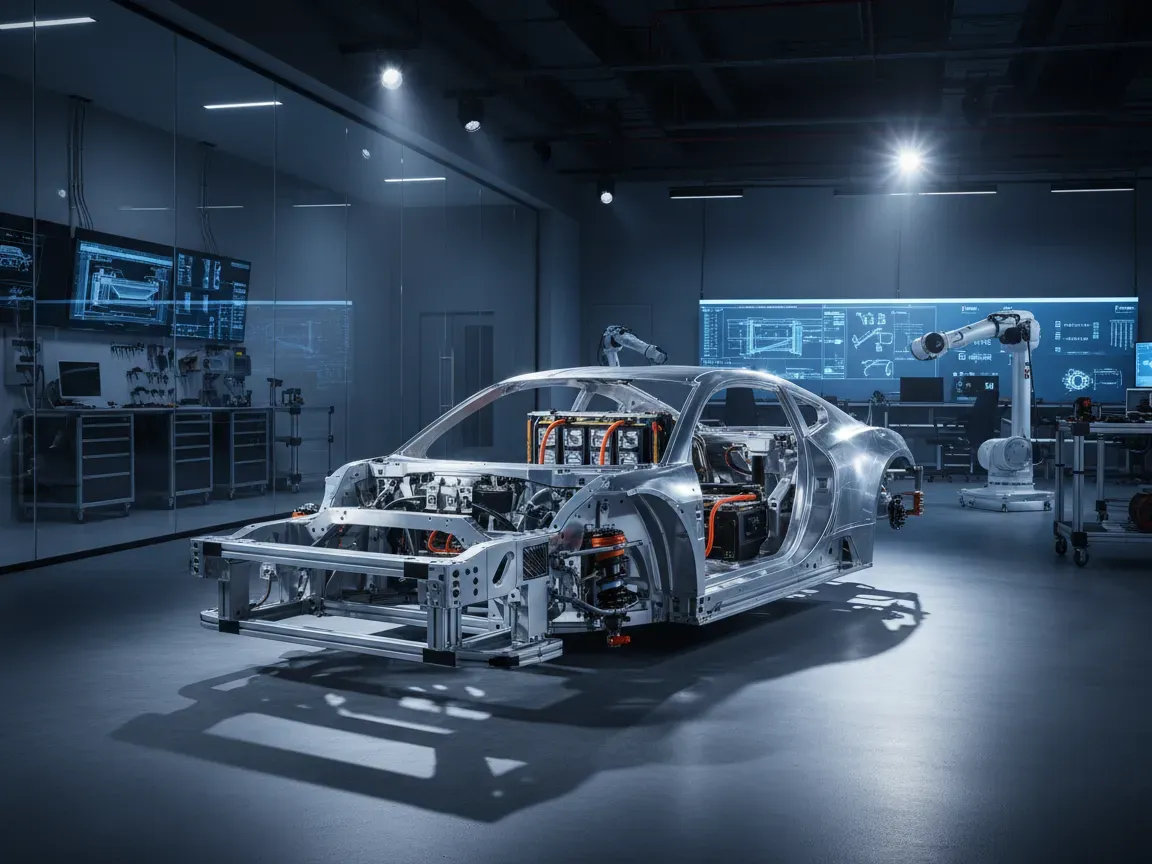
To keep the proportions authentic, Porsche devised a bespoke packaging solution known internally as the e-core layout. The entire high-voltage battery pack sits vertically between the passenger bulkhead and the rear axle.
This arrangement mirrors the exact footprint previously occupied by the combustion flat-four or flat-six engine. The car keeps its compact packaging intact while freeing up front trunk utility and preserving a tidy rear luggage bay.
By grouping the battery modules in the center of the car, engineers concentrate the heaviest components near the vehicle center of gravity. Everything revolves around the driver, rather than stretching outward toward the bumpers.
How Rear-Mounted Cells Transform EV Handling and Agility?
Weight placement dictates vehicle agility. A flat floor pack lowers the overall center of gravity, but it also spreads that weight evenly across the entire wheelbase, making the car resistant to quick directional transitions.
Concentrating cell mass behind the cabin transforms how an electric vehicle attacks corners:
- It creates a low polar moment of inertia, enabling instant turn-in response.
- Weight transfers predictably to the rear wheels during hard corner exits.
- It delivers front-to-rear balance tailored specifically for aggressive track driving.
The resulting weight distribution heavily favors the rear axle, closely mirroring the iconic 40:60 split found in competition sports cars. Drivers get natural mechanical grip under power without relying entirely on electronic torque management to simulate sports car behavior.
Keeping the Driver Low to the Pavement
Seating height forms an intimate connection between driver and road. By moving the battery pack behind the cockpit, Porsche keeps the vehicle floor ultra-thin.
Occupants sit millimeters off the road surface, with legs extended straight forward in a proper sports car posture. The car retains its ultra-low roofline and athletic silhouette, avoiding the bloated proportions common to electric conversions.
A compact frontal area also delivers massive aerodynamic benefits. Slicing through the air with minimal drag improves high-speed efficiency, helping offset energy consumption without needing an oversized battery that adds needless pounds.
Overcoming the Inevitable Curb Weight Penalty
Heavy curb weight remains the toughest challenge for electric performance cars. Even the most energy-dense modern battery chemistry carries significantly more bulk than a traditional aluminum engine block and a full tank of gas.
Porsche attacks this penalty through strict lightweight construction throughout the chassis:
- Advanced multi-material frames blend high-strength steel, cast aluminum, and composites.
- The battery enclosure itself serves as a rigid structural member of the chassis.
- Compact electric drive motors reduce ancillary driveline hardware.
Every pound saved across the chassis cushions the impact of the battery mass. More importantly, because that mass sits right behind the driver, the extra pounds do not fight the suspension mid-corner the way an elongated floor pack would.
Can an Electric Powertrain Truly Replicate Classic Boxster Thrills?
A major hurdle for electric sports cars is delivering sensory engagement without combustion engine sounds. A howling exhaust note is impossible to duplicate honestly, but sports car dynamics have always centered on chassis communication and cornering poise.
Instant torque from electric motors actually complements mid-engine balance. Power delivery is instantaneous, eliminating the wait for turbo spool or a downshift before rocketing out of a hairpin.
When paired with a low seating position and lightning-fast rotation, the electric powertrain introduces a different, highly precise driving experience. The lack of engine vibrations lets the driver focus entirely on tire adhesion, steering load, and braking thresholds.
The Future Blueprint for Lightweight Electric Performance
Engineering a bespoke battery layout proves that carmakers do not have to accept identical skateboard foundations for every electric model. Porsche demonstrates that driving dynamics still matter enough to justify complex, dedicated platforms for niche sports cars.
This custom mid-pack approach establishes a clear template for future lightweight performance machines. As solid-state and high-density cells mature, the packaging will become even more compact, widening the performance gap between true driver cars and generic commuter platforms.
For driving purists, this design confirms that the sports car form factor can survive the electric transition intact. The silhouette stays low, the steering stays sharp, and the heart of the car remains planted right behind your back.

Alex Ryder
Alex spends his life behind the wheel, testing everything from electric vehicles to rugged off-roaders. He delivers honest, in-depth reviews, reports on the latest industry news, and offers practical maintenance tips for car owners.