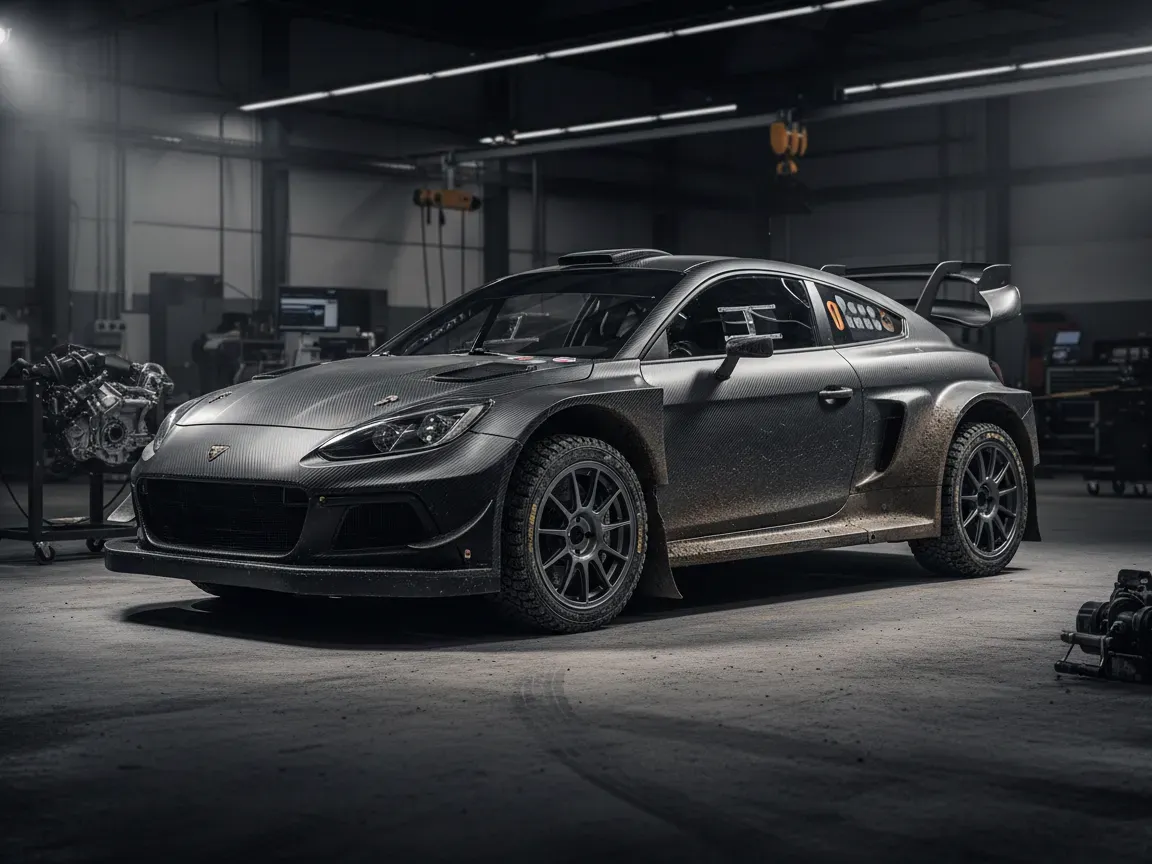
Ford is officially stepping back into the FIA World Rally Championship as a full factory entrant for the 2028 season. The American automaker plans to elevate its long-standing collaboration with British engineering outfit M-Sport, transforming their semi-privateer effort into a fully funded works program. The move ends over a decade and a half of limited corporate backing, setting the stage for a dramatic showdown against entrenched rivals Toyota and Hyundai.
By committing early, the Blue Oval positions itself directly in front of the major powertrain overhaul planned for 2029, signaling a serious shift in its global motorsport strategy.
What We Know About the Ford WRC Return in 2028?
Ford plans to pour significant financial and technical resources into a factory-tier campaign starting in 2028. Rather than building an organization from scratch, the automaker will rely on its established technical hub while injecting massive resources directly from Ford Performance headquarters in Michigan.
- Full corporate financial backing to match the budgets of current championship leaders
- Advanced aerodynamic and powertrain development supported by Ford Performance engineers in the United States
- Direct driver contracts and expanded testing programs across diverse gravel and tarmac surfaces
- A commitment extending through the transition to the next-generation rules cycle
This renewed backing ensures that the team can pursue elite driving talent and run extensive testing schedules that were previously constrained by privateer budgets.
Rebuilding the M-Sport Ford Factory Partnership
M-Sport has carried the Ford banner in global rallying since the late 1990s. Even after Ford ended its direct factory program at the close of 2012, Malcolm Wilson’s squad continued designing, assembling, and campaigning rally machinery with technical assistance rather than full works funding.
Upgrading this relationship changes the competitive baseline. While M-Sport managed historic championship victories in 2017 and 2018 with the Fiesta, surviving against well-funded factory teams like Toyota Gazoo Racing has become increasingly difficult under the complex Rally1 hybrid rules. With full factory support, M-Sport gains access to Ford’s high-end simulation tools, rapid prototyping, and specialized engineering departments. This collaboration bridges the gap between private agility and corporate scale.
Why Ford Stepped Away from Works Rallying?
Ford withdrew its primary factory involvement after the 2012 season, driven by shifting corporate priorities and global economic pressures. At the time, automotive marketing focused heavily on regional consolidation and cutting overhead costs in traditional motorsport arenas.
Rallying requires brutal logistics, high crash-repair overhead, and continuous engine development. Without a direct link between stage cars and showroom floors, the business case weakened. The company shifted its high-dollar racing efforts toward endurance sports cars and off-road desert racing like the Dakar Rally and Baja 1000. While the Fiesta and later the Puma carried the Ford badge on WRC stages, the bills were predominantly paid by independent sponsors and M-Sport itself.
How the 2029 WRC Technical Regulations Influence This Move?
Entering in 2028 is a calculated tactical play. The FIA has outlined plans for an overhaul of top-tier rally regulations set to debut in 2029, aimed at reducing vehicle build costs, updating sustainable fuel standards, and simplifying chassis architectures.
Arriving one year before the rule reset gives Ford critical advantages:
- Operational warm-up to fine-tune team logistics and trackside personnel under full works conditions
- Direct involvement in stakeholder discussions shaping the final 2029 powertrain and chassis guidelines
- Immediate data collection to accelerate development of the 2029 ground-up platform
- A seamless transition from the outgoing vehicle package into the next technological era
Rallying continues to serve as an extreme proving ground. The technical lessons learned from lightweight chassis rigidity, compact cooling systems, and hybrid durability feed directly into consumer road cars and performance divisions.
Frequently Asked Questions About Ford’s Rally Program
Which vehicle will Ford race upon its factory return?
The current campaign relies on the Puma crossover body shape under Rally1 regulations. Ford has not confirmed whether it will retain this silhouette for 2028 or introduce a new production model aligned with its future commercial lineup.
Will Malcolm Wilson and M-Sport still run the operational team?
Yes. M-Sport will remain the operational arm running the rally program from its Dovenby Hall base in Cumbria, UK, while working hand-in-hand with Ford Performance in the United States.
Why not wait until the new regulations debut in 2029?
Starting in 2028 allows Ford to iron out organizational bottlenecks, calibrate its testing schedules, and avoid the risks associated with launching a new team and a completely new car platform at the exact same moment.
Can Ford Reclaim Global Rally Supremacy Before 2030?
Re-entering the WRC as a true works outfit gives Ford the engineering leverage it has lacked for more than fifteen years. Money alone does not guarantee stage wins against the clinical execution of Toyota or the persistence of Hyundai, but it eliminates the resource deficits that have held back Blue Oval machinery on demanding rallies like Kenya and Finland.
The next few seasons will reveal how quickly Ford Performance can integrate its road car research and development with M-Sport’s stagecraft. If the partnership synchronizes ahead of the 2029 regulatory reset, rally fans can expect a three-way manufacturer war that elevates the entire championship into a faster, more competitive era.

Alex Ryder
Alex spends his life behind the wheel, testing everything from electric vehicles to rugged off-roaders. He delivers honest, in-depth reviews, reports on the latest industry news, and offers practical maintenance tips for car owners.