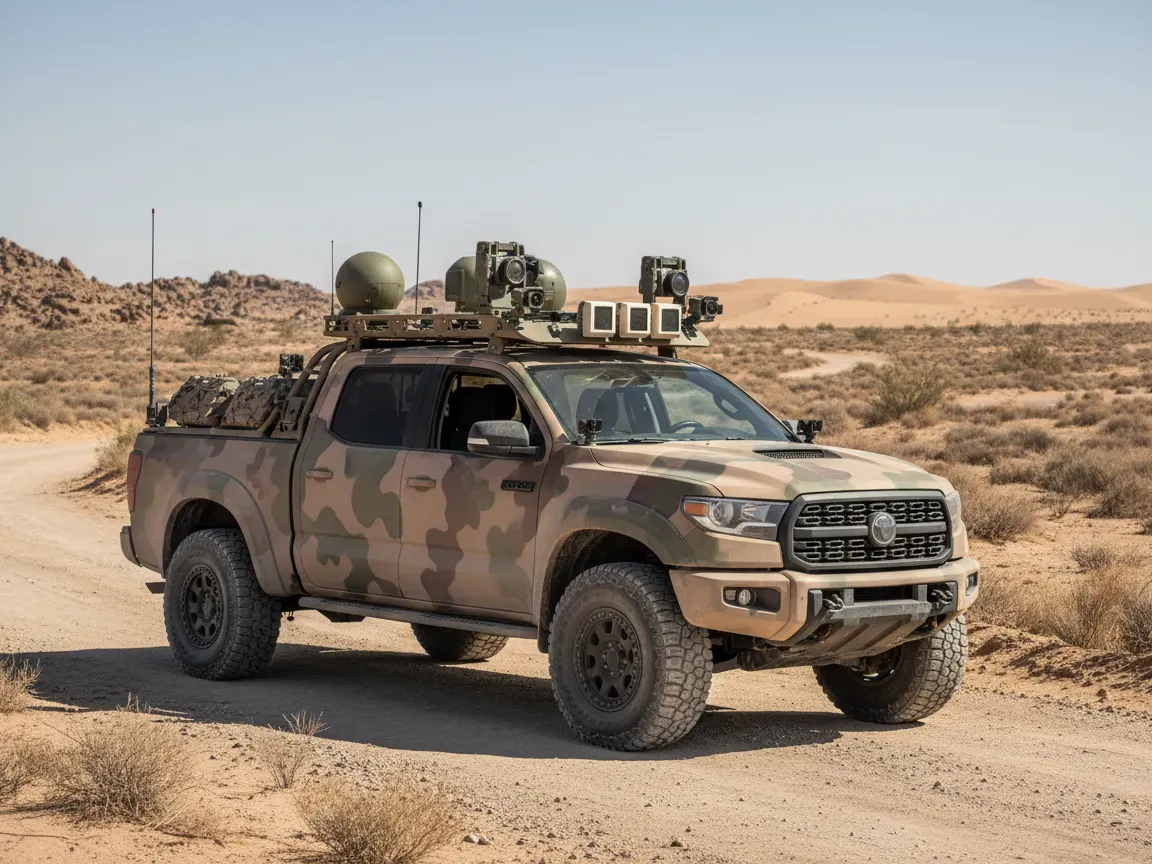
Military supply lines have always been prime targets during armed conflicts. Moving fuel, ammunition, and rations across contested territory puts transport crews directly in harm’s way, exposing them to ambushes and roadside explosives. GM Defense is tackling this vulnerability by turning a standard Chevrolet Silverado 3500HD into a fully autonomous tactical logistics vehicle.
By blending commercial automotive hardware with advanced robotic software, the company aims to pull human operators out of the most dangerous resupply runs. The initiative demonstrates how consumer pickup platforms can rapidly shift into tactical tools capable of keeping warfighters supplied without adding extra risk to human life.
How GM Defense Transforms the Silverado 3500HD for Combat Logistics?
Turning a civilian pickup into an uncrewed workhorse starts with taking advantage of the truck’s underlying structure. GM Defense strips away unnecessary interior comforts and equips the Silverado 3500HD with drive-by-wire controls. This system allows onboard computing units to control steering, braking, and throttle without any physical interaction from a human driver in the cab.
The vehicle relies on a sensor suite mounted strategically around the chassis. Lidar, radar, and optical cameras feed real-time spatial data to the processing unit, allowing the truck to detect obstacles, navigate uneven off-road paths, and adapt to rapidly shifting ground conditions. The result is a heavy pickup capable of following pre-programmed coordinates or running in autonomous convoy formations alongside other vehicles.
Why the Army Prioritizes Driverless Supply Convoys?
Moving supplies across the battlefield requires a massive amount of personnel. Convoys moving through hostile areas need not only drivers but also armed escorts, mechanical support, and air cover. When an uncrewed system takes over the driving responsibilities, military leaders can dramatically reduce the footprint needed for each logistics mission.
- Eliminating human drivers keeps frontline soldiers focused on tactical objectives rather than basic transport tasks.
- Remote control and autonomous pathfinding reduce casualties caused by improvised explosive devices along typical transit routes.
- Automated vehicles can run continuous delivery cycles through the night or during low-visibility weather without driver fatigue.
Autonomous logistics turns unpredictable cargo corridors into safer, repeatable supply chains.
Heavy-Duty Upgrades Powering the Autonomous Prototype
The commercial Silverado 3500HD already brings strong towing capacity and a rigid frame, but defense applications demand extra durability. GM Defense pairs the factory Duramax turbo-diesel powertrain with reinforced suspension elements to support heavy military gear and harsh off-road use.
Auxiliary power systems receive significant upgrades. The autonomous sensor arrays, encrypted communication radios, and computing stacks consume far more electricity than a consumer truck ever requires. Heavy-duty alternators and specialized tactical battery packs keep the autonomous brain running reliably in extreme heat and dust. Furthermore, underbody armor plates safeguard the oil pan, transmission, and fuel storage against trail debris.
Commercial Platforms Versus Purpose-Built Tactical Vehicles
Building military transport from a clean slate takes years of development and billions of taxpayer dollars. In contrast, borrowing an existing commercial architecture gives defense programs a massive shortcut in both time and budget.
Automakers produce hundreds of thousands of heavy-duty pickups each year. That high volume means replacement parts, structural components, and powertrain elements are already rolling off assembly lines across the United States. When the military adopts this hardware, it plugs into a proven commercial supply chain. Mechanics can service core drivetrain components using standard commercial repair tools, which slashes lifecycle maintenance costs compared to rare, custom-engineered military haulers.
What Distinguishes This Truck from the Infantry Squad Vehicle?
GM Defense already scored a major win with the Infantry Squad Vehicle, known as the ISV. While both platforms draw their roots from civilian trucks, their mission profiles are completely different.
The ISV is based on the midsize Chevrolet Colorado ZR2 and carries up to nine infantry soldiers directly into operational areas. It prioritizes light weight, agility, and the ability to be carried inside or slung beneath military helicopters. In contrast, the Silverado-based autonomous prototype is a heavy-duty hauler. It trades troop capacity for high-payload cargo space, robotic driving systems, and sustained hauling power designed to move tons of freight across rough terrain without a driver behind the wheel.
The Road to 2027 Trials and the Future of Military Automation
Field tests and military evaluations will expand as defense planners prepare for wider operational trials slated around 2027. These assessments focus on how well autonomous driving algorithms handle mud, deep sand, electronic jamming, and GPS-denied environments. The goal is to ensure the software can make safe, rational routing decisions even when communication links back to command hubs drop completely.
As commercial driverless software matures, military supply logistics will continue shifting toward uncrewed machinery. Testing platforms like the modified Silverado gives armed forces a realistic preview of how future formations will mix crewed fighting vehicles with autonomous cargo carriers.
What Commercial Autonomy Means for Battlefield Support?
Adapting commercial pickups into autonomous logistics trucks signals a major change in how defense equipment gets designed and fielded. Instead of waiting a decade for dedicated military designs to leave the drawing board, military planners can now field advanced robotics built on proven, mass-produced truck frames. That shift gives defense teams rapid modernization while keeping program expenses under control.
For ground forces operating in contested environments, the practical payoff is straightforward: vital supplies arrive on schedule, and fewer drivers are sent into dangerous supply routes. Moving routine transport duties to automated platforms frees up personnel, protects service members, and turns commercial pickup technology into a reliable operational asset.

Alex Ryder
Alex spends his life behind the wheel, testing everything from electric vehicles to rugged off-roaders. He delivers honest, in-depth reviews, reports on the latest industry news, and offers practical maintenance tips for car owners.