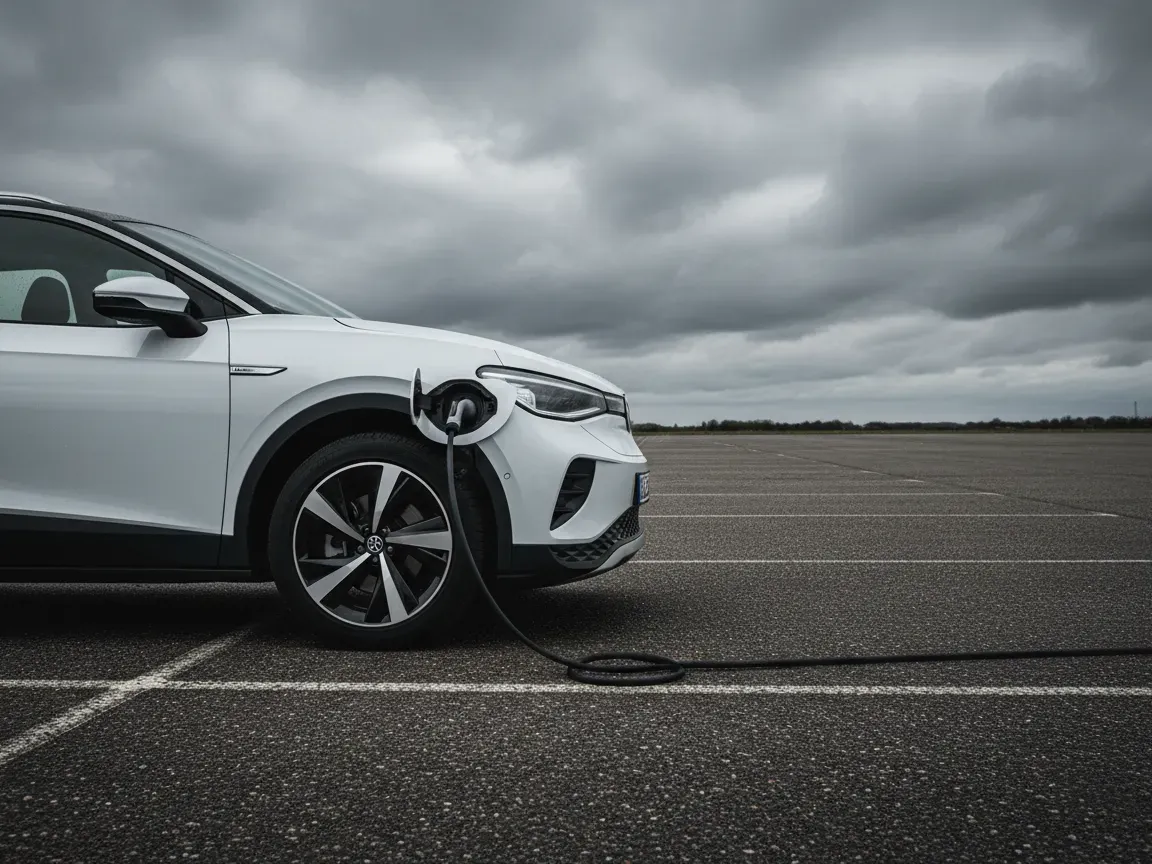
Volkswagen has issued an urgent safety recall for 22,524 ID.4 electric SUVs across the United States. Federal safety regulators have warned that the high-voltage battery packs inside these vehicles pose a severe fire risk. Because investigators have not yet pinpointed the origin of the defect, the automaker is directing drivers to alter their daily charging routines immediately to minimize potential hazards.
Owners face an unsettling situation: their vehicles carry an active fire risk, yet the automaker cannot provide a permanent mechanical or software fix right away. Understanding the boundaries of this recall and adjusting vehicle settings will keep drivers and their homes protected while engineers search for answers.
Urgent Safety Alert for 22,524 Volkswagen ID.4 Owners
The National Highway Traffic Safety Administration published recall documents warning that internal battery components can fail, overheat, and ignite. A total of 22,524 sport utility vehicles are included in this campaign. Unlike previous software glitches or minor switchgear defects, an uncontained high-voltage battery fire presents immediate property damage and personal safety risks.
Volkswagen has requested that drivers take immediate precautions with where they charge and store their vehicles. While the company formulates an official remedy, owners must avoid charging past a specific threshold. Electric vehicle fires burn exceptionally hot and require thousands of gallons of water to extinguish, making early prevention the best defense for anyone parking an ID.4 in an attached garage.
Which Model Years Are Affected by the Battery Fire Risk?
The recall focuses primarily on early production runs of the rear-wheel-drive and all-wheel-drive crossover. Specifically, the action covers select 2021 through 2023 model year Volkswagen ID.4 vehicles assembled with specific battery cell configurations.
Earlier production models manufactured in Zwickau, Germany, along with early units built at the Chattanooga, Tennessee plant, share similar high-voltage architecture. Volkswagen discovered through warranty claims and field reports that specific battery module batches are showing abnormal thermal behavior under heavy load or full state-of-charge conditions.
Why Has the Root Cause of the Fires Remained Unknown?
Automotive battery packs are complex arrangements of hundreds of individual cells, cooling channels, buss bars, and thermal management circuits. In this recall, Volkswagen engineers and battery suppliers have tracked multiple fire incidents, but the exact physical catalyst remains unclear.
Several factors complicate the diagnosis:
- Fire damage inside the battery pack typically destroys the physical evidence needed to isolate the first cell that failed.
- The issue may stem from microscopic manufacturing defects within cell separators rather than external wiring faults.
- Thermal runaway can occur sporadically, showing normal voltage readings right up until an overheating event begins.
- Software logging from burned vehicles is often unrecoverable once the low-voltage electronics lose power.
Because Volkswagen cannot guarantee whether the root fault lies in the cell chemistry, internal separator plates, or the battery management firmware, they cannot release a targeted component replacement yet.
How Can Drivers Cap Battery Charging at 80 Percent Today?
Until Volkswagen finalizes a permanent fix, the automaker explicitly advises all owners of affected vehicles to limit high-voltage battery charging to a maximum of 80 percent. Running a lithium-ion battery at higher states of charge increases internal cell pressure and chemical stress, which can trigger a thermal event in compromised hardware.
Drivers can adjust their vehicle charging profile directly inside the cabin:
- Turn on the vehicle and tap the Charging menu on the center infotainment display.
- Locate the maximum charge slider or target charge level option.
- Adjust the target down from 100 percent to 80 percent.
- Save the setting as the default profile for home charging locations.
- Verify through the myVW smartphone app that scheduled charging sessions stop once the battery hits 80 percent.
Maintaining this threshold lowers internal temperatures, slows cell degradation, and provides a crucial safety buffer against overheating until technicians inspect the pack.
Steps to Verify Your Vehicle Identification Number on NHTSA
Not every single ID.4 produced between 2021 and 2023 carries the affected battery pack. Drivers should verify whether their specific crossover is part of this recall campaign rather than guessing based on registration date alone.
Checking your vehicle status takes only a few minutes:
- Locate your 17-character Vehicle Identification Number on the driver-side door jamb or on the lower corner of the front windshield.
- Visit the official NHTSA recall lookup tool at nhtsa.gov/recalls on your phone or computer.
- Type in your full 17-character code and submit the search.
- Review the safety report for recall campaign notices referencing the high-voltage battery.
- Contact your local authorized Volkswagen dealership service center to ensure your current contact information is on file for future recall remedy letters.
Checking the federal database directly ensures that you receive real-time updates as soon as Volkswagen announces an approved repair procedure.
What Lies Ahead for Volkswagen and EV Battery Safety Standards?
This incident places significant pressure on Volkswagen as the brand continues expanding its electric vehicle lineup in North America. Automotive battery safety standards are tightening worldwide, and unexplained battery fires create consumer hesitation toward electric adoption. The automaker will likely face rigorous oversight from federal regulators as it validates any proposed software patch or physical module replacement.
For the broader automotive sector, this recall highlights the delicate balance between maximum range and thermal stability. Automakers frequently push cell capacity to advertise higher range figures, but higher energy density demands tighter tolerances during manufacturing. Future industry standards will almost certainly mandate redundant cell-level monitoring to flag abnormal resistance shifts weeks before a pack can reach dangerous temperatures.
Protecting Your Vehicle and Home Moving Forward
Navigating an open recall without an immediate mechanical fix requires patience and discipline. While an 80 percent charging cap reduces your daily driving range, adhering to this restriction significantly reduces the risk of cell degradation and thermal runaway. Drivers should also consider parking their vehicle outdoors away from structures during charging sessions whenever possible.
Volkswagen plans to notify affected owners by mail once validation tests confirm a permanent repair strategy. Staying informed through the federal recall portal and keeping your vehicle settings restricted will protect your investment and keep your household safe while engineers resolve the defect.

Alex Ryder
Alex spends his life behind the wheel, testing everything from electric vehicles to rugged off-roaders. He delivers honest, in-depth reviews, reports on the latest industry news, and offers practical maintenance tips for car owners.