For years, Tesla promoted its advanced driver-assist package under the ambitious banner of Full Self-Driving. In Europe, that era is coming to a close. Facing mounting pressure from consumer protection watchdogs and traffic authorities, the automaker has adjusted its European marketing language. The decision shows how strict regional oversight can strip away Silicon Valley branding to reveal what a vehicle can actually do on the road.
Why European Regulators Pushed Back Against Tesla?
European consumer protection agencies and transport regulators have long taken issue with automotive marketing that blurs the line between automated assistance and true autonomy. In several member states, watchdog groups argued that selling a product called Full Self-Driving was inherently deceptive. The label led average buyers to believe that their vehicle could navigate traffic, handle complex hazards, and operate safely without human intervention.
Regulators worried that this naming convention fostered dangerous overconfidence behind the wheel. When drivers believe a car can drive itself, their reaction times slow down, and they are more likely to take their eyes off the road. European safety bodies insisted that marketing language must reflect immediate vehicle capabilities, not aspirational software updates planned for the future.
Breaking Down the New Name for European Drivers
To comply with regional trade standards and prevent official sales bans on the software, Tesla shifted its terminology across European configurators and localized materials. Rather than selling a promise of total self-reliance, the updated description clarifies that the system is a supervised driving aid.
The software packages now highlight specific driver assistance functions rather than an all-inclusive autonomous dream:
- Explicit references to active driver supervision requirements
- Language that categorizes the features as convenience and navigation aids
- Technical disclaimers that prevent drivers from assuming the car assumes legal liability
This adjustment aligns vehicle descriptions with standard automotive definitions used across the European Union. It directly tells the customer that their hands must stay on the steering wheel.
Level 2 Automation Behind the Marketing Promises
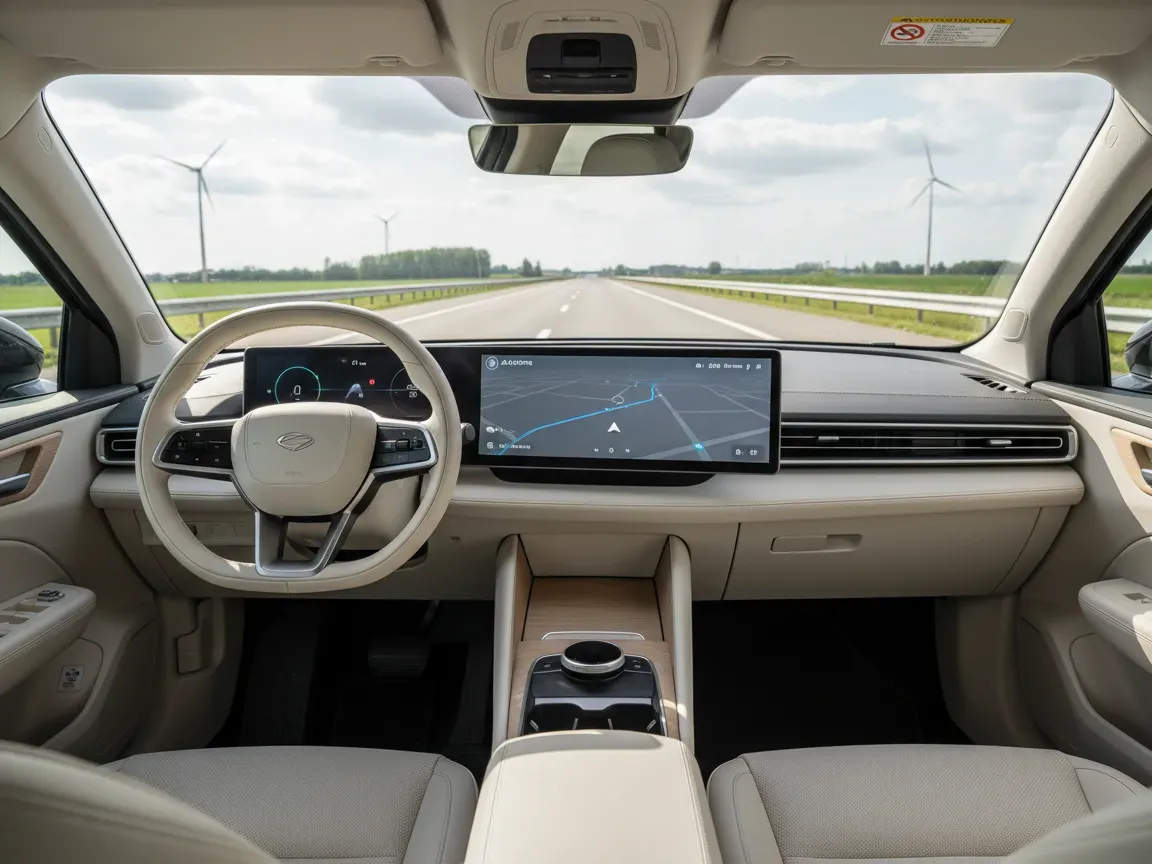
Despite the high-tech branding, Tesla’s current public software operates strictly as a Level 2 automated driving system under SAE International definitions. A Level 2 vehicle can manage steering, acceleration, and braking simultaneously under specific conditions, but it cannot replace the driver.
At this tier of automation, several core principles remain absolute:
- The human driver retains legal responsibility for every maneuver the vehicle makes.
- The system cannot handle every sudden road hazard, construction zone, or extreme weather event.
- The vehicle requires continuous attention, monitoring the driver through cabin cameras and steering wheel torque sensors.
True autonomous driving begins at Level 3, where a car can temporarily assume driving responsibility under defined parameters. Because Tesla’s consumer software cannot take legal responsibility during a crash, calling it self-driving created a false impression of technological readiness.
Regulatory Clashes: Europe Versus the United States
The divergence between European and American approaches to automotive software has never been clearer. European authorities rely heavily on a type-approval framework, meaning a manufacturer must prove a system meets strict safety standards before bringing it to market. This proactive model prevents companies from releasing public beta software that turns public streets into testing grounds.
In contrast, the United States relies more on a self-certification process followed by post-market enforcement through agencies like the National Highway Traffic Safety Administration. While American regulators have opened numerous investigations into driver-assist collisions, the system allows manufacturers wider latitude to deploy experimental software directly to everyday consumers. European regulators simply refused to tolerate that level of public risk.
What This Rebrand Means for New Car Buyers?
For shoppers looking at electric vehicles in Europe, the rebrand brings much-needed clarity to the showroom floor. Buyers are less likely to spend thousands of dollars expecting a chauffeur service when the actual delivery is an advanced lane-centering and cruise control package. It forces realistic expectations from the day of delivery.
Furthermore, this change affects resale values and insurance liabilities. When marketing matches engineering reality, drivers are less likely to challenge crash culpability by claiming the car promised to drive itself. It sets a clear operational boundary for every driver sharing the road.
Should American Regulators Force a Similar Change?
Consumer advocates in the United States have repeatedly urged federal agencies to follow Europe’s lead. When automated systems use names that overstate their abilities, driver vigilance inevitably drops. If a vehicle requires continuous human monitoring to prevent accidents, calling it self-driving introduces an unnecessary safety hazard.
Federal and state regulators in the US continue to scrutinize these marketing practices, with some states already passing legislation to prohibit deceptive automated driving terminology. A standardized approach would eliminate confusion nationwide, ensuring that American drivers do not mistake an assistive cruise control tool for a fully autonomous machine.
Clear Terminology Shapes Safer Roads
Automotive progress depends on honest communication between carmakers and the public. When software updates arrive with labels that exceed their real-world capabilities, drivers drop their guard, often with catastrophic consequences. Europe’s intervention shows that passenger safety improves when authorities hold automakers accountable to precise engineering facts rather than speculative marketing.
As driver-assist technology expands into mainstream commuter cars, accurate labeling becomes an essential safety feature in its own right. The European decision provides a functional blueprint for the rest of the world. Clear labels remind every driver that regardless of the software running behind the dashboard, human attention remains the ultimate safety device.

Alex Ryder
Alex spends his life behind the wheel, testing everything from electric vehicles to rugged off-roaders. He delivers honest, in-depth reviews, reports on the latest industry news, and offers practical maintenance tips for car owners.